
Stair elevator for seniors
A stair elevator for seniors is a seat on a rail that carries an older person up and down the stairs. It is meant for someone who can still sit, grip and get up, yet finds climbing the stairs tiring or risky.
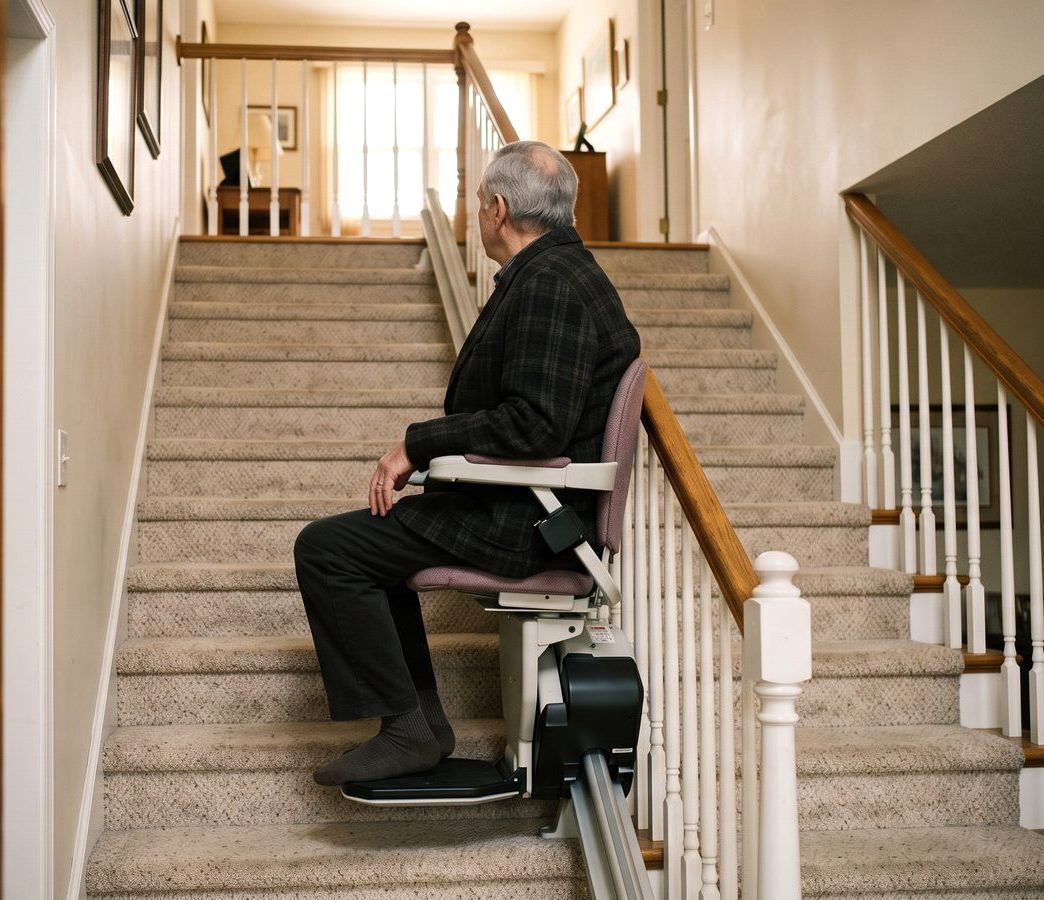
People a stair elevator suits
The rider has to sit down, fasten the belt, hold the control and stand up again at the top. That takes some strength and a clear mind (National Council on Aging). If your parent can sit up in an ordinary chair and get out of it, they can most likely use one.
Some families search for a stair escalator for elderly parents; it is the same seat on a rail. Not sure it is right? Ask the doctor to send a therapist who helps people with daily tasks and movement to watch your parent on the stairs. If their knees no longer bend far, a standing stair elevator with a small high seat may suit them better.
Stair elevator for handicapped riders
A wheelchair user can ride an ordinary stair lift if they can get from the wheelchair onto the seat, alone or with help, and a second wheelchair waits upstairs. If not, a wheelchair platform lift takes the person up still seated in the wheelchair.
Why the stairs matter as parents get older
Each year more than a quarter of people over 65 have a fall, and under half of them mention it to a doctor. Falls are the most common cause of injury after 65, and one fall doubles the chance of another (Centers for Disease Control). Riding up seated takes away the climb, the slip and that tired last step.
Who helps pay for a stair elevator for elderly parents?
- Medicare: does not pay. In Medicare's rules a stair lift is a home improvement, not medical equipment (Medicare.gov). Some Medicare Advantage plans, the private plans that replace Original Medicare, give a small allowance.
- Medicaid: in many states, Medicaid programs that pay for care at home cover some or all of the cost. You usually need their approval before you buy (National Council on Aging).
- Veterans: VA housing grants can pay for changes to the home when a disability is linked to military service, up to $126,526 in 2026 (Veterans Affairs).
- Taxes: if the main reason for the lift is medical care, you can usually list it with your other medical costs on your tax return. With a note from the doctor, a health savings or flexible spending account can usually pay for it.
- Your Area Agency on Aging: the Eldercare Locator on 1-800-677-1116 finds yours.
Every state's assistive technology program
Every state runs a free assistive technology program, paid for with federal money. They lend equipment so you can try it at home, pass on used equipment, and many offer low-interest loans.
Each state has a free assistive technology program. Pick yours to see its name and phone number. See every state's program.
Program and phone number for every state
The list comes from the national directory of state assistive technology programs.
Questions families ask
Does Medicare cover a stair elevator for seniors?
No. Original Medicare files a stair lift under home changes, which it does not cover. A handful of Medicare Advantage plans offer a small allowance, so it is worth a call to the plan.
Can the VA assist with paying for a stair lift?
Sometimes. The smaller VA home grant will not pay for a stair lift, but its larger housing grants for a disability linked to military service can pay for home changes. Ask your VA housing office.
Is someone with dementia safe on a stair lift?
Only while they still remember to fasten the belt and hold the control. The surest way to know is a home visit from a therapist before you buy.
Sources: the National Council on Aging on Medicare and stair lifts and Veterans Affairs home grant rules.
Work with your parent to plan the stairs.
Call so an installer near your parent can visit, take measurements of the stairs, and provide a written quote.