
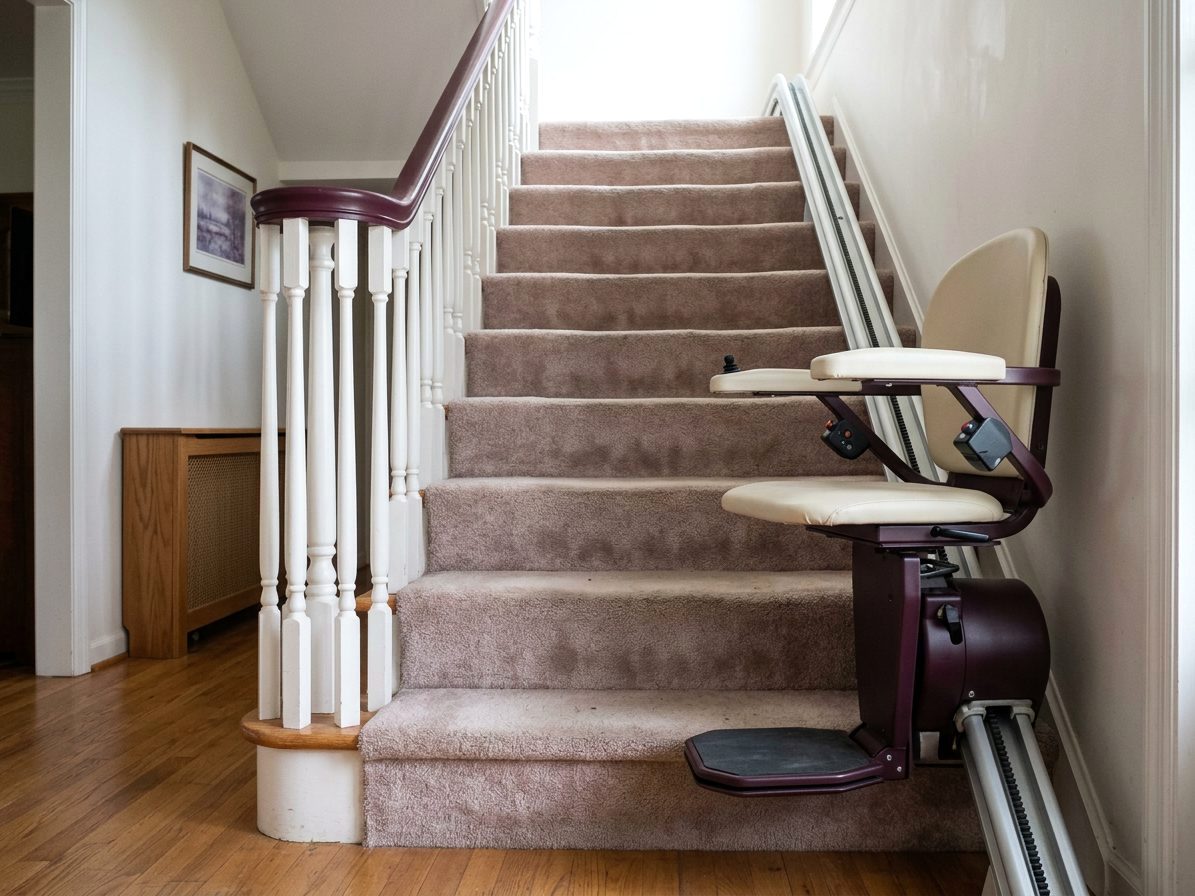
Straight stair elevator
A rail made in one piece goes up one flight. Since manufacturers cut stock rails to fit, this type costs the least and often installs fastest. Fitted prices mostly range from $2,500 to $5,000 (NCOA).
Rail and seat choices shape the types of stair elevators: straight rails, curved rails on stairs that turn, outdoor lifts that are sealed, or perch seats you lean on half standing.
| Type | Made for | Typical price, fitted |
|---|---|---|
| Straight | One flight with no turns or landing | $2,500–$5,000 |
| Curved | A staircase that bends or stops at a halfway landing | $8,000–$12,000 |
| Outdoor | Porch, deck or garden steps | $4,000–$8,000 |
| Standing (perch) | Stairs that are narrow, or knees that do not bend well | $2,000–$5,500 on straight stairs |
The National Council on Aging provides these prices, with Retirement Living supplying figures for perch seats.
A rail made in one piece goes up one flight. Since manufacturers cut stock rails to fit, this type costs the least and often installs fastest. Fitted prices mostly range from $2,500 to $5,000 (NCOA).
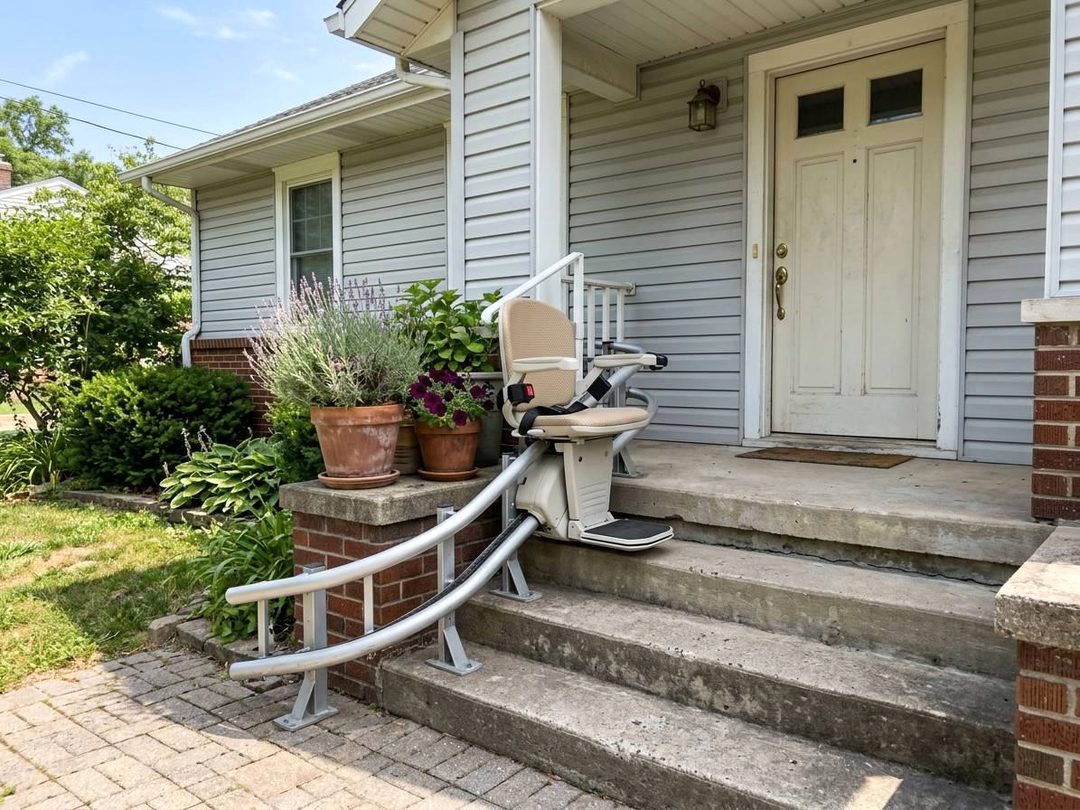
Outdoor models are sealed against sun and rain, whether curved or straight, and typically include a waterproof seat cover. Fitted units usually cost about $4,000 to $8,000, though HomeGuide shows some reaching up to $12,000.
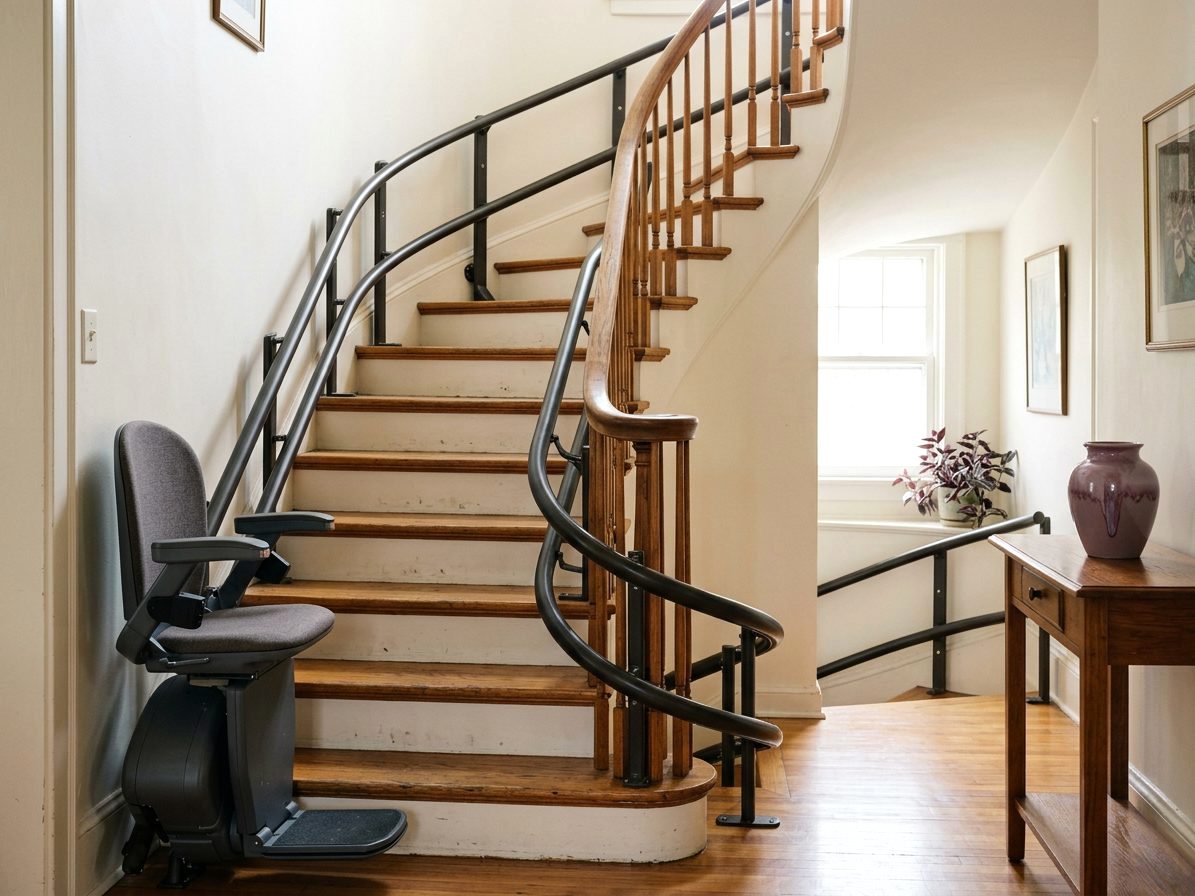
A curved rail is made for stairs that turn, stop at a landing, or climb more than one flight. Total cost varies with the number of curves, though most installations run from $8,000 to $12,000 (NCOA).
You also need this model if your straight stairs include a central landing. At certain landings, two straight lifts can replace one curved rail for a lower price.
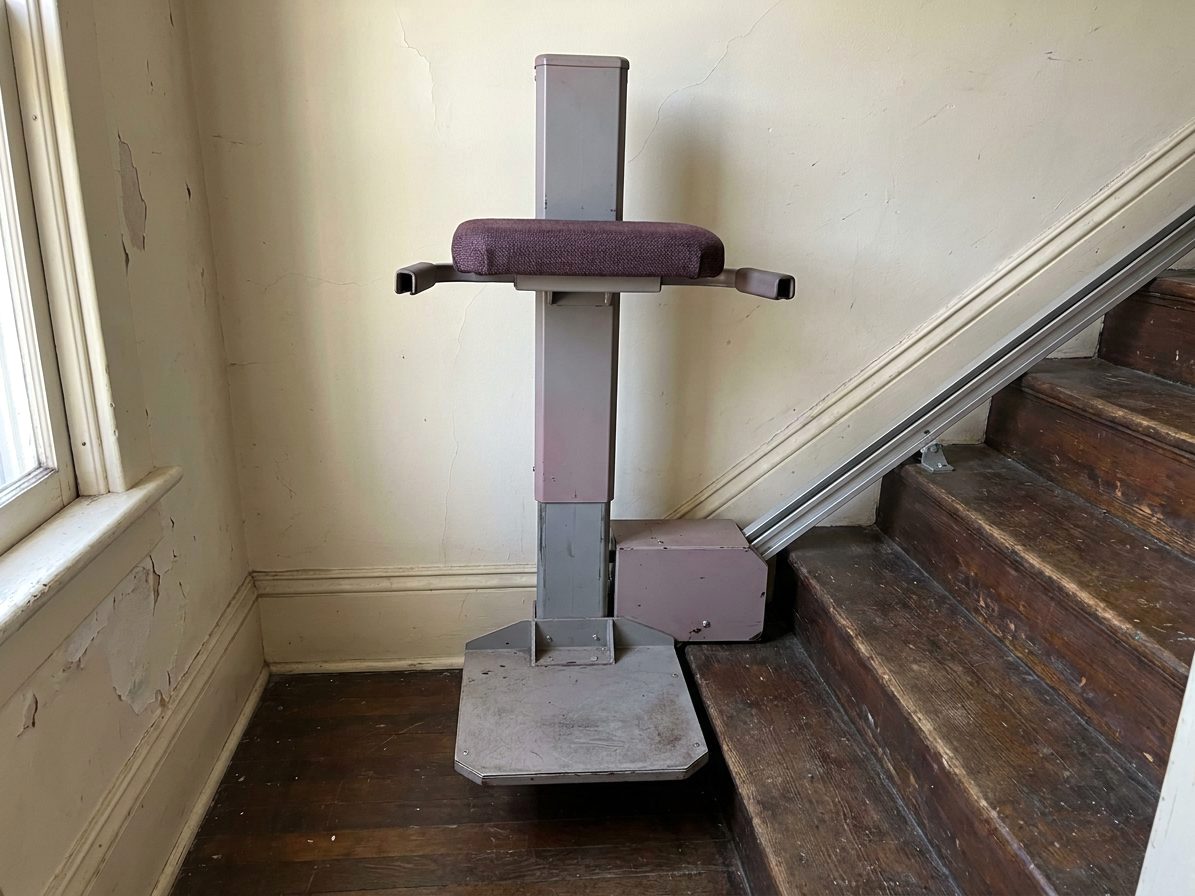
A standing lift lets you lean on a high, small seat while half sitting and half standing. This lift fits those who cannot bend their hips, back, or knees much, and works on stairs too narrow for a full chair. Still, the staircase needs a width of at least 26 to 28 inches.
Good balance is needed to ride one. It is unsafe for people who get dizzy often (Retirement Living).
Most standard chairs hold about 300 pounds. Heavy-duty versions handle up to 600 pounds (NCOA). Models like the Stannah Sadler tilt so you can stand at the top.
None of these options work for anyone who cannot leave a wheelchair. Learn instead about platform lifts that carry the wheelchair.
An installer can give you an answer by phone, then verify it during a brief home visit.